
What is “The Educator Exchange”?
In a nutshell, The Educator Exchange is a secondment-based professional learning program for educators. It gives teachers the opportunity to learn in another school, observe different approaches, share expertise, and bring back new ideas that strengthen their own community. For schools, it brings a fresh perspective, develops professional connections and grows the collective practice.
It’s a simple, powerful way to build capability through classrooms, colleagues, and practice.
Why it exists
Teachers regularly say they want more meaningful development, schools face pressure to attract and keep their staff, and traditional PD often feels disconnected from the realities of teaching.
The Educator Exchange was created to offer something different: authentic, experience-driven learning that builds confidence, capability, and connection across the system.
Created by a teacher
The program was founded by an educator who has taught across diverse settings and experienced firsthand the impact of learning from colleagues in different environments. The Exchange is built on the belief that when educators connect across schools, everyone benefits: the teacher, the students, and the wider system.
How it works
The Educator Exchange runs over a 4-week period. Long enough for meaningful professional impact, short enough to minimise disruption for schools.
Each exchange includes: handover periods, structured professional learning, an in‑school placement, and ongoing support.
-
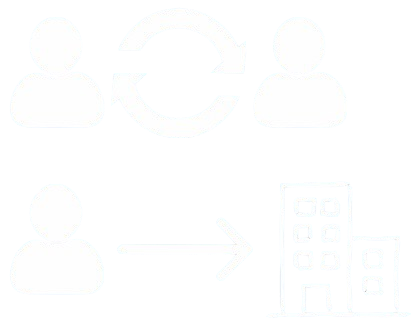
Teacher A ↔ Teacher B
Two educators swap schools, learning from each other’s environments while contributing their expertise.
-
Teacher A → School B
An educator is placed in a different school to learn from and share their practice, without requiring a reciprocal placement.
A guided process that shapes meaningful, impactful experiences.
The process for educators and schools ensures the right people are matched with the right environment and are supported from beginning to end.
-
Schools or individuals nominate an educator who is ready to stretch their practice, open to learning in a new environment, and able to contribute their experience and perspective to another school community.
-
We use each educator’s profile to identify a host school that best supports their goals, strengths, and development needs. Matches are shaped by:
school context
student needs
teaching areas
leadership aspirations
individual learning goals
-
Educators spend a short, purposeful period in their matched school, observing practice, contributing their expertise, and learning from colleagues in a new environment.
During the exchange, educators will undertake light-touch, high-impact professional development tasks.
-
After the exchange, educators return to their home school with:
new strategies
renewed motivation
practical insights
strengthened professional identity
ideas ready to implement
Educators may also present their experiences to their principals, faculty or whole school upon return.
Professional Learning
Each exchange goes beyond simply teaching in another school. A key feature of the program is the professional learning, which adds depth, structure, and purpose to the experience, without being onerous.
Through guided learning, reflection, and supported collaboration, participants build new insights, strengthen their professional identity, and bring fresh ideas back to their home school.
-
A professional learning and reflection program that complements and enriches the exchange.
-
Professional learning that is evidence‑based, utilises inquiry-based learning and promotes professional collaboration
-
Experiences, initiatives and practices to be shared whilst on exchange and with home schools to improve and affirm educational practices